Remember when a soda cost a nickel? Unless you grew up in the first half of the 20th century - you wouldn't. But for an incredible 70 years until 1959, a bottle of Coca-Cola cost only five cents.
The Minimum Wage Problem
Today things look a little different, and there’s a big reason for it: prices are going up while the federal minimum wage remains stagnant. For the past 15 years - since Move For Hunger was founded, this number has sat at $7.25 / hour. Looking at this another way: in 1950, a loaf of bread cost $0.12, 16% of the hourly wage; but in 2023, that same loaf cost around $2.50–$4.00, or about 34–55% of the hourly federal minimum wage.
The federal minimum wage is currently in effect in 20 states; the other 30 states have minimum wages higher than the federal standard. Keep in mind the hourly rate is MUCH lower than $7.25 for tipped workers. The reality is that 47 million Americans are experiencing food insecurity and have limited access to fresh food. And stagnant wages aren’t helping.
Put simply, the real value of the minimum wage today provides less purchasing power than it did in 1950, over 70 years ago.

Did you know in 1950 the federal minimum wage was 75 cents an hour? Accounting for inflation, that’s around $10.90 today.
A Deeper Dive on Price Hikes and Inflation
So, what is the actual price of your plate? The truth is your dollar doesn’t go as far as it used to. Over the past 77 years, the average inflation rate for food has increased 3.26% every year. This means $30 worth of groceries in 1959 would cost $333.73 now.

Even buying the bare minimum at the grocery store is getting expensive. Household staples such as eggs, continue to increase in price every year. As an easy, versatile protein source, they are one of the most frequently purchased items at the grocery store. Here’s how the price of eggs per dozen has increased since 1960.
.jpg)
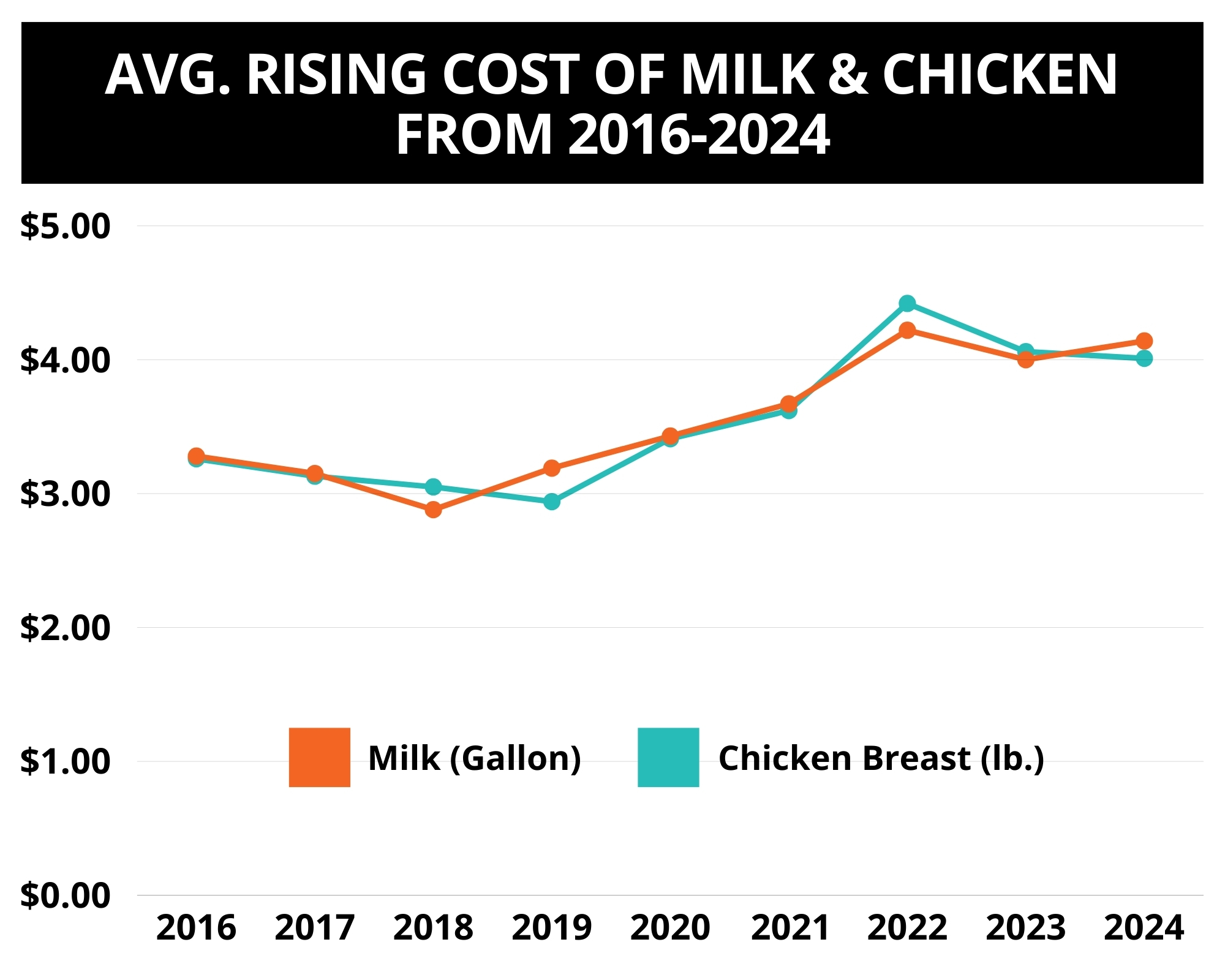
According to a recent consumer price index, the price of eggs is up 37.5% from where it was a year ago. You may be wondering how the price of other food items have changed. The chart below shows how the cost of milk and chicken has fluctuated just in the last eight years.
With these statistics, it’s no wonder 60% of adults from 18-64 used a credit card to purchase groceries last year. Without options for affordable, accessible, and nutritious food, food insecurity in the U.S. will continue to rise along with the prices.
To encourage change and make a difference - explore our advocacy page. Positive change requires collective action. Learn more about how you can support hunger in your local community and make a real difference today.