When you think about who shows up in the aftermath of a disaster, a few organizations probably come to mind. National relief networks, hunger relief organizations, and faith-based emergency response teams mobilize quickly to support affected communities. Their work is essential.
But behind many disaster response efforts is another network that often goes unseen: food banks, nonprofits, and logistics partners moving truckloads of food across state lines to communities in crisis.
For more than fifteen years, Move For Hunger has helped power that disaster relief network.
A Story That Starts in Asheville
In September 2024, Hurricane Helene tore through the Southeast, and the mountains of western North Carolina took one of the hardest hits. Asheville and the surrounding communities were devastated by storms that destroyed homes and crippled water systems. MANNA FoodBank, the regional food bank serving 16 counties in western North Carolina, lost its warehouse to catastrophic flooding and had to rebuild its entire operation while, at the same time, feeding tens of thousands of neighbors in crisis.
More than a year later, MANNA is still in active recovery. The work isn’t over, and the need hasn’t faded.
And yet, when wildfires recently swept through parts of Coastal Georgia, MANNA was one of the first to reach out…not asking for help, but offering it. A truckload of frozen proteins and meals, ready to be sent to Second Harvest of Coastal Georgia, who was on the ground supporting families displaced by the fires.
One food bank in active recovery. Sending help to another food bank in active response. More than 300 miles between them.
The Charity Freight Program Bridged the Gap
MANNA had the food, and Second Harvest had families lined up to receive it. But 300 miles of highway sat between them, and for two food banks already stretched by their own emergencies, the cost of a single cross-state freight load can be the difference between food reaching families and food sitting in a warehouse.
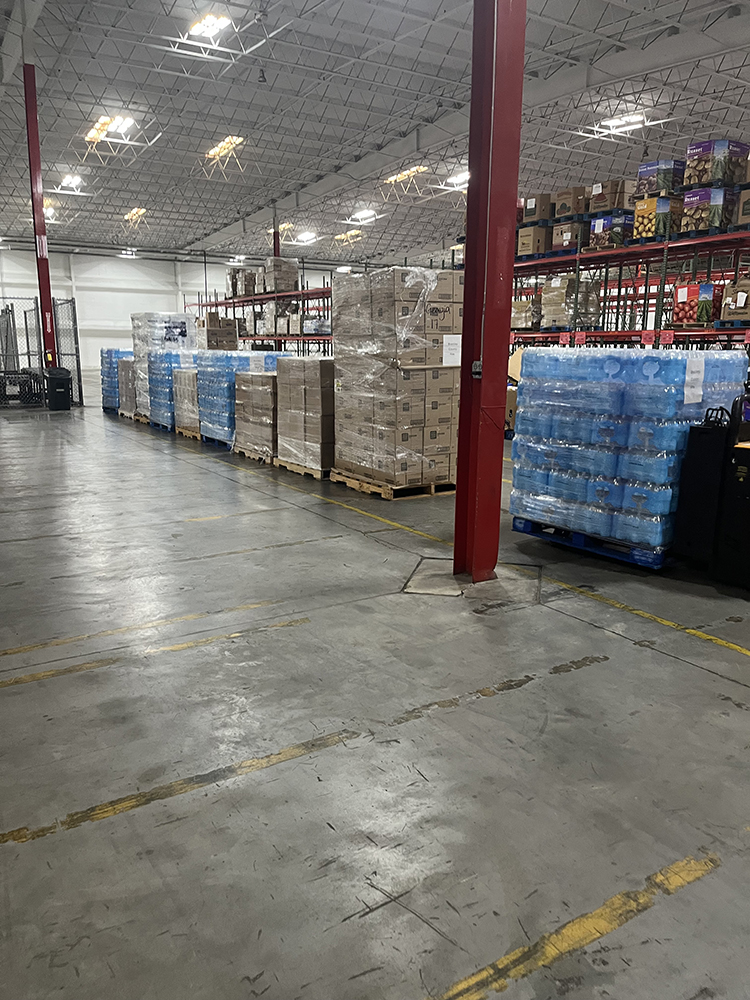
That’s the kind of moment our Charity Freight Program was built for. Working through our logistics network of trusted carriers, we coordinated the transport of more than 28,130 pounds of food from Asheville to Coastal Georgia, where it was quickly distributed to families impacted by the wildfires.
No food bank should have to choose between helping their own community and helping another. Our job is to make sure they never have to.
“For families impacted by the wildfires, a box of food can mean one less worry during a time of uncertainty. It represents a community standing beside them and reminding them they are not alone as they begin the long process of recovery.”
— Jennifer Leigh Floyd, Southeast Branch Director, Second Harvest of Coastal Georgia
A Network Built for Moments Like This
When disaster strikes, the question on the ground is rarely “Is there food somewhere?” There almost always is. The harder question, the one that determines whether families eat tonight or next week, is how the food actually gets there.
For more than fifteen years, Move For Hunger has been building the network that makes moments like this possible – moving companies, freight carriers, corporate donors with surplus to give, and food banks across the United States and Canada. We’re not a first responder in the traditional sense. We’re the connective tissue between the food banks that have surplus, the food banks that have urgent need, and the logistics partners with the trucks to bridge them. It’s a food recovery network designed to activate quickly, move efficiently, and make sure that when disaster strikes, getting food where it needs to go is never the part that slows things down.
In 2024 alone, after Hurricanes Helene and Milton struck the Southeast US, the Move For Hunger network transported more than 817,000+ pounds of food and water to the communities in need. With the 2026 Atlantic hurricane season beginning June 1st, that same network is preparing to activate again.
Every dollar donated to our disaster relief efforts provides four meals to families in need. From wildfires in Maui to tornados in Kentucky to hurricanes along the Gulf Coast, the work looks different every time. But the principle stays the same: when a community is in crisis, getting food to them shouldn’t depend on whether someone can afford a truck.
“The Brantley County fires affected more than land and property—they impacted families, livelihoods, and a sense of security. Our food bank was committed to ensuring that no one faced those challenges alone, and we remain dedicated to supporting our community through both emergencies and recovery.”
— Jennifer Leigh Floyd, Southeast Branch Director, Second Harvest of Coastal Georgia
The Work Continues
In times of crisis, communities show us who they really are. MANNA FoodBank, still rebuilding from one of the worst disasters in its history, didn’t hesitate to send help when another community needed it. Second Harvest of Coastal Georgia mobilized to get that food into the hands of families who’d lost so much. Our role was simply to keep the food moving between them, and to make sure logistics never stand in the way of one neighbor helping another.
To MANNA, to Second Harvest, and to the families in both Asheville and Coastal Georgia who are still rebuilding their lives: we’re with you, and we’re not going anywhere. With hurricane season approaching, we’re ready, and we hope you’ll be ready with us. We’re grateful for every partner, donor, and food bank moving by our side.
Read more stories from our network: How a Hawaiian mover acted quickly to provide emergency relief support for Maui residents