Love is often framed as something personal and private—a feeling, a gesture, a moment shared between people who care about one another. But love can also be structural. It can show up in systems, decisions, and partnerships that quietly make life more humane for millions of people we may never meet. And it continues beyond holidays like Valentine’s Day.
At Move For Hunger, we believe fighting hunger is an act of love. Of course, not the sentimental kind, but the practical kind. The kind that shows up when food would otherwise be wasted. The kind that moves through trucks, buildings, warehouses, and communities. And the kind that only works when supporters across industries step up and say: we can do better.
Fighting Hunger Isn’t About Scarcity…It’s About Connection
In the United States, hunger doesn’t exist because we lack food. It exists because we lack connection.
Every day, millions of pounds of perfectly good food are thrown away during moves, relocations, renovations, and transitions. At the same time, families across the country are making impossible choices between groceries, rent, utilities, and healthcare. These two realities shouldn’t coexist, but they do.
Move For Hunger exists to close that gap.
Our work is built on a simple but powerful idea: if we can move people and belongings efficiently, we can move food too. By partnering with movers, logistics providers, and housing operators, we intercept surplus food at key transition points and redirect it to local food banks and pantries—before it’s wasted.
This isn’t charity as an afterthought. It’s compassion embedded directly into how industries operate.
The Move For Hunger Model (In Plain English)
At its core, Move For Hunger is a connector.
We partner with:
-
Moving and relocation companies
-
Logistics providers
-
Multifamily and housing organizations
-
Companies across industries committed to strong philanthropy & community involvement
Together, we identify moments where food is most likely to be wasted: move-outs, relocations, office closures, community transitions, bulk food recovery opportunties; and create simple, repeatable ways to rescue it.
Here’s how it works:
-
Partners integrate food recovery into their existing workflows (moves, turnovers, cleanouts).
-
Food that would otherwise be discarded is collected safely and efficiently.
-
That food is delivered to local food banks and pantries, strengthening community food systems.
-
Impact is tracked and reported, ensuring accountability and scale.
The result? A model that turns everyday movement into sustained hunger relief, without reinventing the wheel or placing the burden on individuals alone. If you're reading this and your in any of these spaces, cosidering joining our network!
Love in Action: How Supporters Make This Work
What makes this model powerful isn’t just the idea—it’s the supporters who bring it to life.

On the Move: Beltmann Relocation Group
For companies like Beltmann Relocation Group, moving isn’t just about logistics, it’s about responsibility.
As a long-standing Move For Hunger supporter, Beltmann has helped integrate food recovery into relocation services across its network. When families move, food is often left behind; not because it’s unusable, but because it doesn’t fit into the chaos of a move. Beltmann teams help ensure that food doesn’t end up in dumpsters, but instead reaches food banks that can put it to immediate use.
This is what operational love looks like: recognizing a predictable problem and building a solution directly into the process (so doing the right thing becomes the easy thing!).
Community Impact: Bell Partners
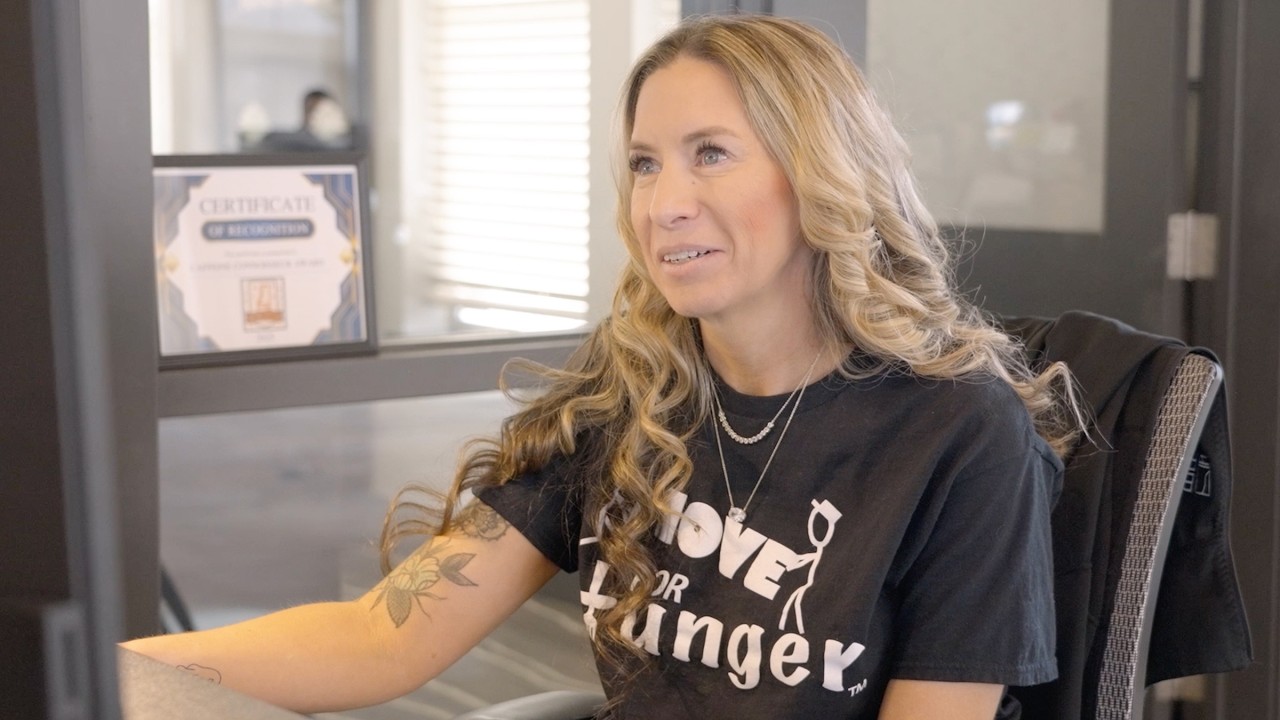
In the multifamily world, few moments generate more waste than resident move-outs and property transitions. Bell Partners understands that these moments also create opportunity.
Through their engagement with Move For Hunger, Bell Partners has supported food drives and recovery efforts that empower onsite teams and residents to take part in hunger relief where they live. Instead of surplus food being discarded during transitions, it’s collected and redistributed locally. This effort strengthens both community ties and food access.
For residents, it’s a chance to leave their community with care. For property teams, it’s a way to embed social impact into everyday operations. For families facing hunger, it’s food on the table.
That’s love expressed through infrastructure.
Why This Matters (Especially Right Now)
Hunger is rising, not falling. Food costs remain high. Safety nets are strained. And at the same time, food waste continues at staggering levels.
In 2025 alone, Move For Hunger helped move over 17 million pounds of food. So what does that mean for 2026? As much as we wish food insecurity didn’t exist, the reality is that it does, and our goal is to exceed 2025’s number as we expand partnerships, engage supporters, and deepen impact across sectors.
This work only scales because these companies choose to act out of shared values.
Fighting hunger at this level isn’t about one-time gestures. It’s about commitment. About choosing systems that reflect care. About understanding that love, when operationalized, can feed millions.
Spread the Love, And Turn Care Into Action
This belief is at the heart of our Spread the Love campaign.
Spread the Love is an invitation to individuals, companies, and communities to turn everyday transitions into moments of impact. It’s a reminder that love isn’t abstract; it’s actionable. And these actionable moments of impact go together like peanut butter and jelly!
When you support Move For Hunger via fundraising or a food drive, you’re not just donating food or dollars. You’re helping build systems that prevent waste, strengthen communities, and ensure families don’t go without.
Support our Spread the Love campaign
Three Takeaways to Carry Forward
-
Hunger is a systems problem—and systems can be redesigned.
Food waste and hunger coexist because of broken connections, not lack of resources. -
Partnership and collaboration is how love scales.
Movers, housing operators, and logistics providers make impact possible by embedding care into how work gets done. -
Every transition is an opportunity.
Moves, turnovers, and changes can mean nourishment, dignity, and hope.
At Move For Hunger, we’ll keep building the bridges that make this possible. Because fighting hunger isn’t just the right thing to do—it’s an act of love in motion.