Hunger affects around 47 million Americans in the United States, but it more directly affects women, minorities, and children. Because of this, powerful women have been stepping up to fight gender and racial disparities for decades by using their platforms to fight food insecurity and raise awareness.
The women of the past have worked hard to create a path for the women of the present to build on and continue the fight against hunger, poverty, and racial disparities.
In honor of Women’s History Month, we’re taking some time to celebrate female voices and leaders that have impacted food insecure communities.
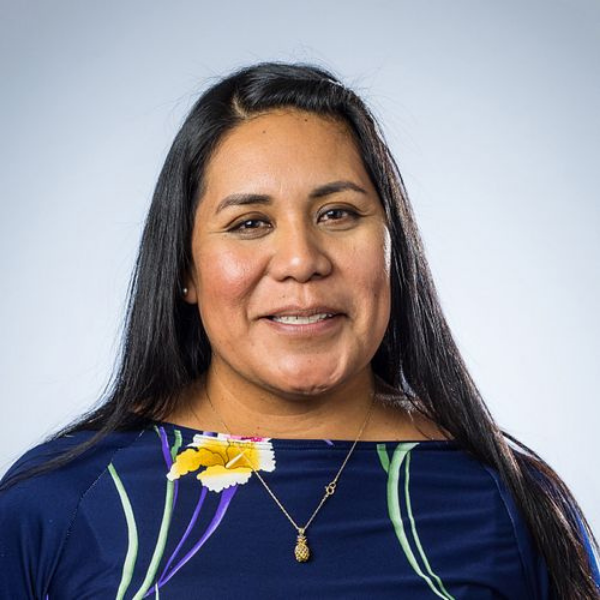
Born and raised in Cochiti Pueblo, New Mexico, A-dae Romero-Briones has a unique perspective on how hunger affects Native American communities. She has spent much of her career fighting for food sovereignty, environmental justice, and indigenous rights. Her work in this sector is much needed, considering 1 in 4 Native Americans experiences food insecurity compared to 1 in 8 Americans overall.
Romero-Briones is currently the Director of the Native Agriculture and Food Systems Program at First Nations Development Institute. Her role supports Tribal-based and Native-led food-related projects with grants and technical support.
"Food is how we communicate with our external environment. When you separate food from our environment, we lose a critical lifeline to our environment, and we can’t gauge environmental health without it," A-dae Romero-Briones said when asked why food sovereignty is important to indigenous communities.
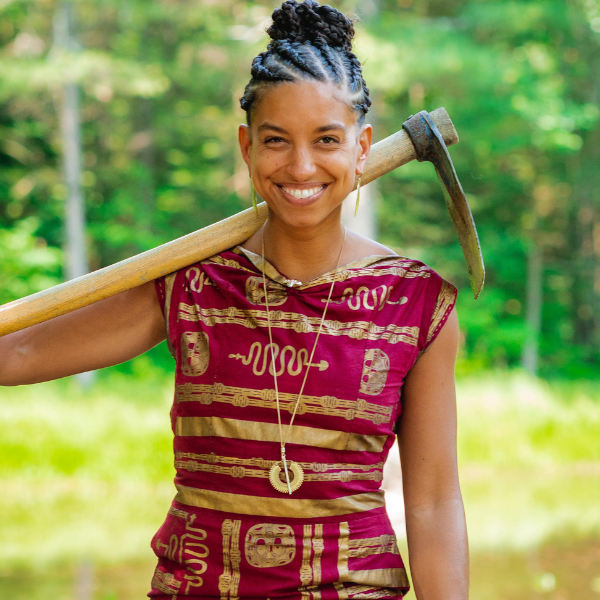
Leah Penniman saw a need and delivered when she moved to an area classified as a food desert in Albany, New York with her two teenage children.
With a love for farming since she was a teenager herself, Penniman purchased over 80 acres of land to utilize for fresh food for her family. Instead, she ended up creating Soul Fire Farm, a training farm for BIPOC that is “committed to ending racism in the food system”.
The farm provides fresh produce to low or no-income locals who otherwise wouldn’t have access to fresh food with what they call their “doorstep delivery program”. This initiative fed around 100 families each week throughout the pandemic.
Penniman also created a program called “Soul Fire in the City”, which builds gardens in low-income communities in the Albany, Schenectady, and Troy areas. In 2019 her team built 3 gardens, in 2020 they built 40, and in 2021 they were able to build 14 more!
“Connection to land is fortifying physical, emotional, and spiritual levels for young people. There are few things more empowering than learning to grow your own food, prepare it for your friends and family, and take care of an ecosystem,” Penniman said.
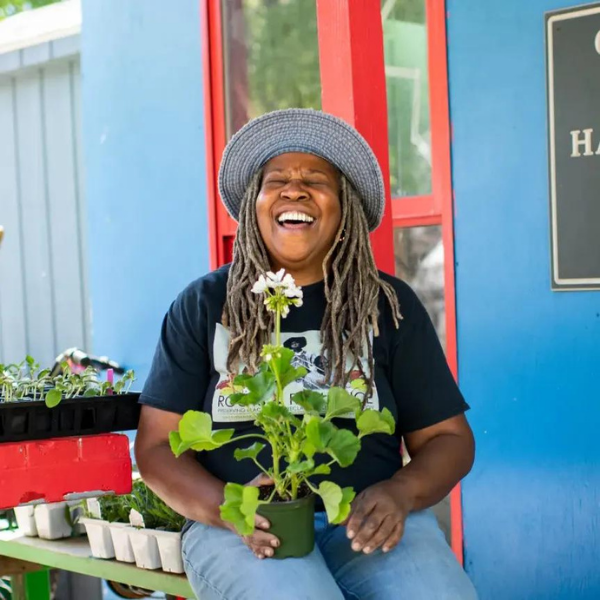
Karen Washington is a Bronx-based activist and urban farmer who recognized the structural inequalities in America’s food system and decided to do something about it.
She is the co-founder of a multitude of organizations; La Familia Verde Garden Coalition, the Black Urban Growers, the Black Farmer Fund, and the Rise and Root Farm. The Rise and Root Farm was founded in 2014 and is rooted in social justice. Through the healing power of food and farming, they have a mission to build a more equitable food system.
“There’s a stigma attached to terms like ‘food desert’ which disenfranchises and disempowers so many of us. It’s only helpful for bureaucrats and statisticians, it doesn’t get to the root problem which is hunger and poverty,” Washington said in an interview with The Guardian.
“The fact is the food system is racist, and access to food is based on color of skin, how much money you have, and where you live. Deserts are natural and have food; food deserts are manmade, not natural. Food is a human right. It’s not natural for people to be living this way and eating this way.”
Claire Babineaux-Fontenot grew up the granddaughter of sharecroppers in a busy household with 107 birth, adopted, and foster siblings. This means she regularly saw firsthand the effects of hunger in children.
Now, as the CEO of Feeding America, she heads the largest hunger-relief organization in the United States, which provided 6.6 billion meals to tens of millions of people in need throughout 2021.
"My greatest hope for the future of hunger-relief organizations is that one day people will no longer need us," Babineaux-Fontenot said in an interview. "I believe that we can achieve an America where no one is hungry."
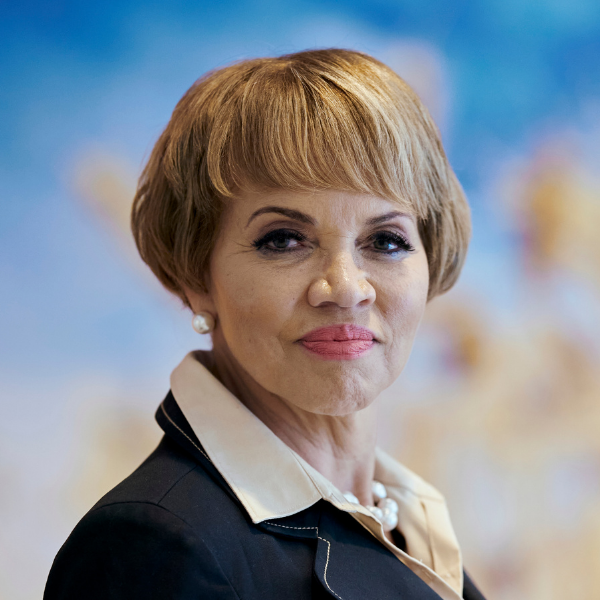
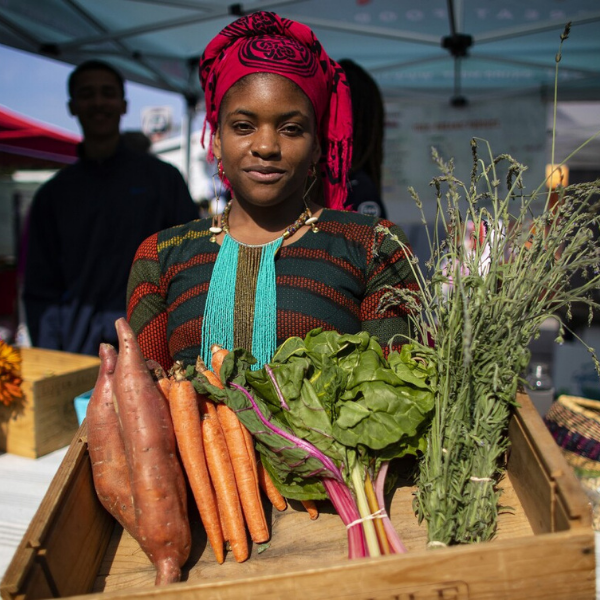
At a young age, Olympia Auset watched close friends and family become severely affected by otherwise preventable diseases, largely due to lack of access to affordable fresh food.
So, in 2016, she gathered a handful of friends to help her buy $100 worth of fresh organic fruits and veggies and set up a stand in South L.A.’s Leimert Park neighborhood. The stand had an eager amount of customers ready to purchase this produce, so as a result, she founded Süprmarkt.
Süprmarkt is a low-cost organic market, which has sold more than 60,000 lbs since its start in 2016. “Many people have never felt the frustration of wanting an avocado but knowing it’s going to be a whole mission to get it,” said Auset. “You often have a choice, right? I’m going to eat healthy today or I’m not going to eat healthy today. So many don’t even have that option, and that’s what we’re trying to fix.”
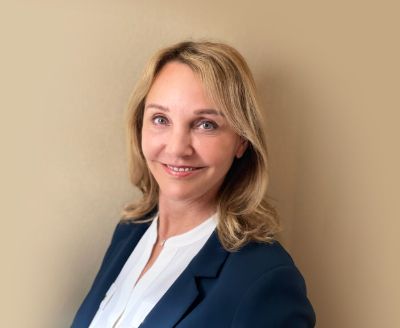
Former head of the UN World Food Programme, Josette Sheeran strongly believes this generation has the tools to solve food insecurity. Sheeran is a long-time activist from Orange, New Jersey who joined the UN in 2007. She served as a Deputy US Trade Representative and put together historic reforms to bring US aid to the Middle East.
Not only does Sheeran advocate for food insecurity, she constructs clear plans on how we can use readily available resources to support the mission to end hunger. "I think we can, in our lifetime, win the battle against hunger because we now have the science, technology, know-how, and the logistics to be able to meet hunger where it comes. Those pictures of children with swollen bellies will be a thing of history," Sheeran said.
The dedication from these women is impactful and making a real difference in the fight against hunger across the country. We can’t wait to see how much more work they do in the hunger relief space!
Want to learn more about food insecurity in America? Read more about female leaders fighting food insecurity, food waste in America, and how hunger affects America as a whole. Or take action today by finding other ways to give or starting a food drive for your community.